



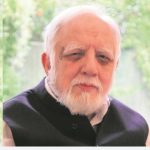
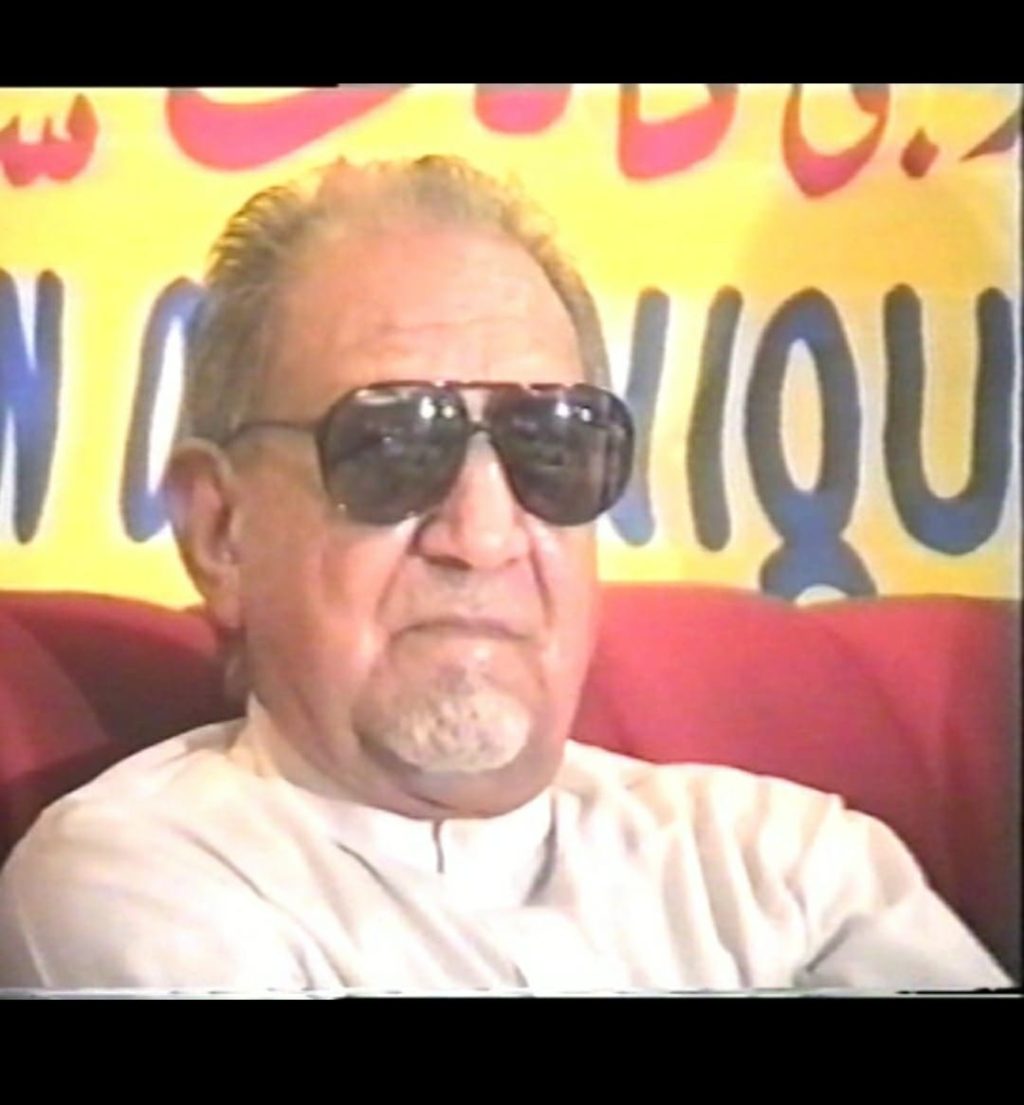
Chaudhry Mohammad Ali Muztar M.A.
Chaudhry Sab, as he was commonly called, and will be remembered so in the circles of his admirers and associates, breathed his last on 13th of this month in Chenab Nagar (formerly Rabwah), reminding us that we all belong to Allah to Whom we all go back. Many could clearly recall his illuminating talks that covered a wide variety of topics and at times wonderfully converged either on his true love for Allah the Almighty or on a devotee’s reverence for his faith. Besides being a scholarly philosopher-cum-psychologist, he was a living legend for being an engrossed witness to many events of great importance in the annals of Pakistan Movement. In addition to that, he was also a great poet of Urdu as well as a gifted connoisseur of English language and literature. I’m afraid the words have their limits while presenting a picture worthy of his prodigiously versatile person in a brief account.
He was born in 1917 in Ferozepur, India and did his masters in Philosophy from Government College Lahore. He taught as a professor in different government colleges including F.C. College Lahore, but spent most of his time at Taleem-ul-Islam College (T.I. College). He would teach English language and literature with equal mastery when the need arose. At T.I. College, he had also served as Hostel warden and later on as the principal. He organized and presided over hundreds of seminars dealing different aspects of philosophy and psychology. For long, he had been a member of the Senate for Academic Council of the University of Punjab as well as that of Board of Studies (for Psychology). In contrast to these academic pursuits he had also served as Senior Vice-President of Pakistan Basketball Team, an interesting dimension of his potentials.
He would relish upon narrating the overlooked pages of Pakistan’s history, such as the laconic logic and eloquence of Abdur Rahim Dard that impressed M.A. Jinnah (Quaid-i-Azam) so seriously that he got convinced to rejoin politics to rejuvenate rigorously Indian Muslims who had been in their dogmatic political doldrums in 1930s. He could marvelously reproduce striking parts of the verbatim of succinct speeches of the first foreign Minister of Pakistan Sir Zafrullah Khan which powerfully presented the case of Kashmir in the UNO and succeeded in getting the most favourable resolutions passed for Pakistan. All this, and much more information of great interest that flowed out of the tenacious memory of Chaudhary sab was actually accrued from his long personal meetings with many great figures like Abdur Rahim Dard and Sir Zafrulla Khan. Being a keen observer of eminent occasions in Pakistan’s history, Chaudhary sab could recount dozens of them for hours and no listener would ever lose his interest. His natural outflow that might be called an artful scheme of presentation of events and the subtle inferences derived from them have always been marvelous and catchy. Above all, his par-excellence sense of humour mingled with his occasional outburst of solemn sobs and tears was at all times pleasantly exquisite and genuinely breathtaking.
His artistic impulses and mystical bent of mind elevated him far above the so-called professional careerism into the high heavens of eternal beauty and thereby made him an inspiringly lovable character. He was so charmingly choosy and so miraculously meticulous about his written words both in Urdu and English language that they seemed alluring strings of pearls and rubies artlessly arranged in symmetric sets. Though he has dexterously translated many original Urdu works of classical religious literature into English, he put forward such a superb translation of Iain Adamson’s A Man of God, a famous biography originally written in English, into Urdu as Aik Mard-i-Khuda that it stands out as his masterpiece. In addition to that, his supervision of the translation of Revelation, Rationality, Knowledge and Truth by Mirza Tahir Ahmad (Fourth Head of Ahmadiyyah Community) as Ilham, Aql, Ilm aur Sachchai could be remembered as a truly monumental work.
Being a born poet, he instinctively believed the words to be the monks and he would stand up fervently to welcome them and would even more reverently escort the noblest ones of them into his beautifully innovative monastery of metaphors. He was not a progressive poet as such, but his ghazal presents a ground-breaking blend of classical and modern Urdu literary idiom. Being an eminent poet, he participated in a lot of national level Mushairas and had presided over many of them. His book of poetry, Ashkon ke Chiraagh bespeaks his being among the top Urdu poets. He really died as an embodiment of sincerely devoted service to his puritanical creed and of valiant voicing for the courageous combatants of solitude and sorrowfulness. May Allah rest his soul with peace in heavens! Amen.
Hafeez Ahmad.
علمی، ادبی، مذہبی، سیاسی اور سماجی موضوعات



متعلقہ
کاش اس زباں دراز کا منہ نوچ لے کوئی، از، طاہر احمد بھٹی
جسم و جاں تک یہ آگ آ پہنچی، از، مونا فاروق
بارہ سیٹیں ،تیرہ تال،اور چودہ طبق۔ طاہر احمد بھٹی